

Intro
This article explains how to open the Data Freshness tab for a Cloud Integration, configure scheduled data freshness checks, and configure data caching for card query results.Overview
Cloud Integrations DataSets stay current through two mechanisms that you configure per integration:- Data freshness checks — Domo polls your source cloud warehouse on a schedule to detect when the underlying data has changed. When an update is detected, connected cards, alerts, and DataFlows reflect the new data on their next load. Domo also performs on-demand freshness checks when a query is executed and the configured cache duration (TTL) has expired, providing more responsive data without relying solely on scheduled polling.
- Data caching — Domo stores the results of card queries temporarily. When a user opens a card, Domo returns the cached result if one exists rather than sending a new query to the warehouse. This reduces query load on your warehouse.
Open the Data Freshness Tab
To configure data freshness and caching for an existing integration:- Navigate to Data Warehouse > Connect Data > Manage existing integrations.
-
Select the tile for your integration type, such as BigQuery.
-
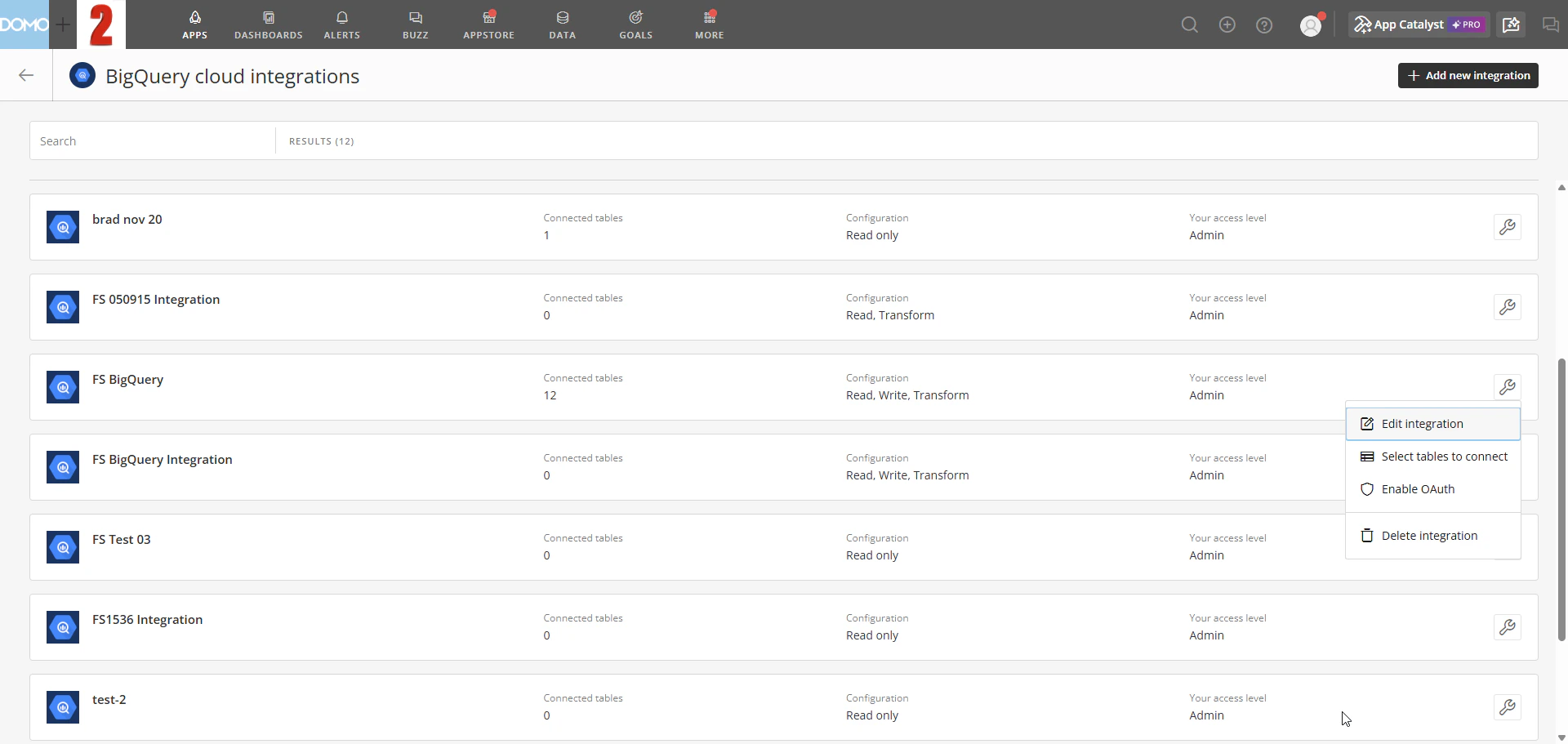
Hover over the integration you want to configure and select the wrench icon that appears, then select Edit integration.
-
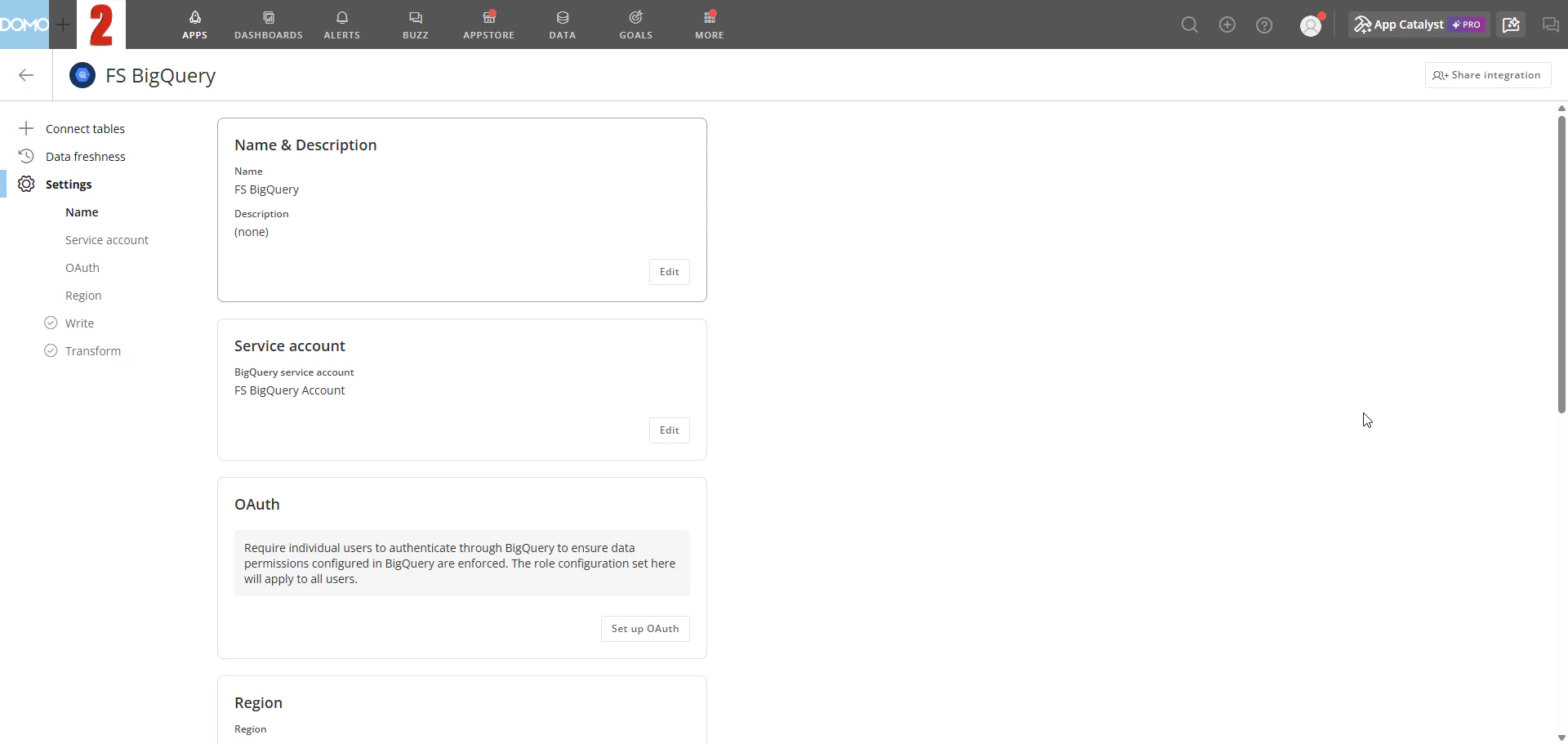
Select the Data Freshness tab.
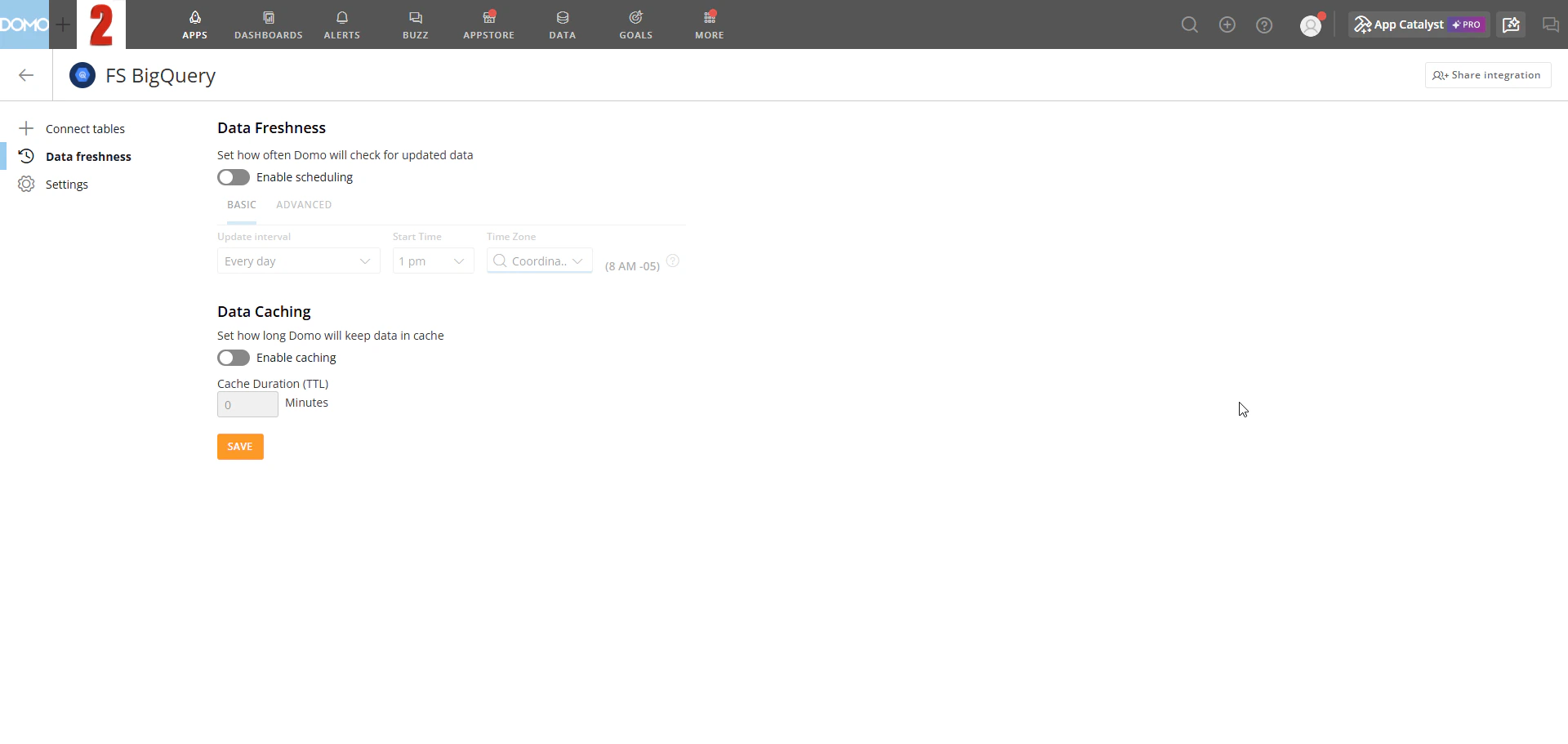
By default, data freshness scheduling and caching are both disabled.
Configure Data Freshness Checks
- Enable the Schedule data freshness checks toggle.
- Select the Basic or Advanced tab to set when Domo checks for updates.
Basic
Basic mode lets you choose a preset update interval from a dropdown. Set the Start Time and Time Zone to control when within the interval checks begin. For sub-daily intervals (every 15 minutes, every 30 minutes, every hour), you can also enable Active hours to restrict checks to a defined time window.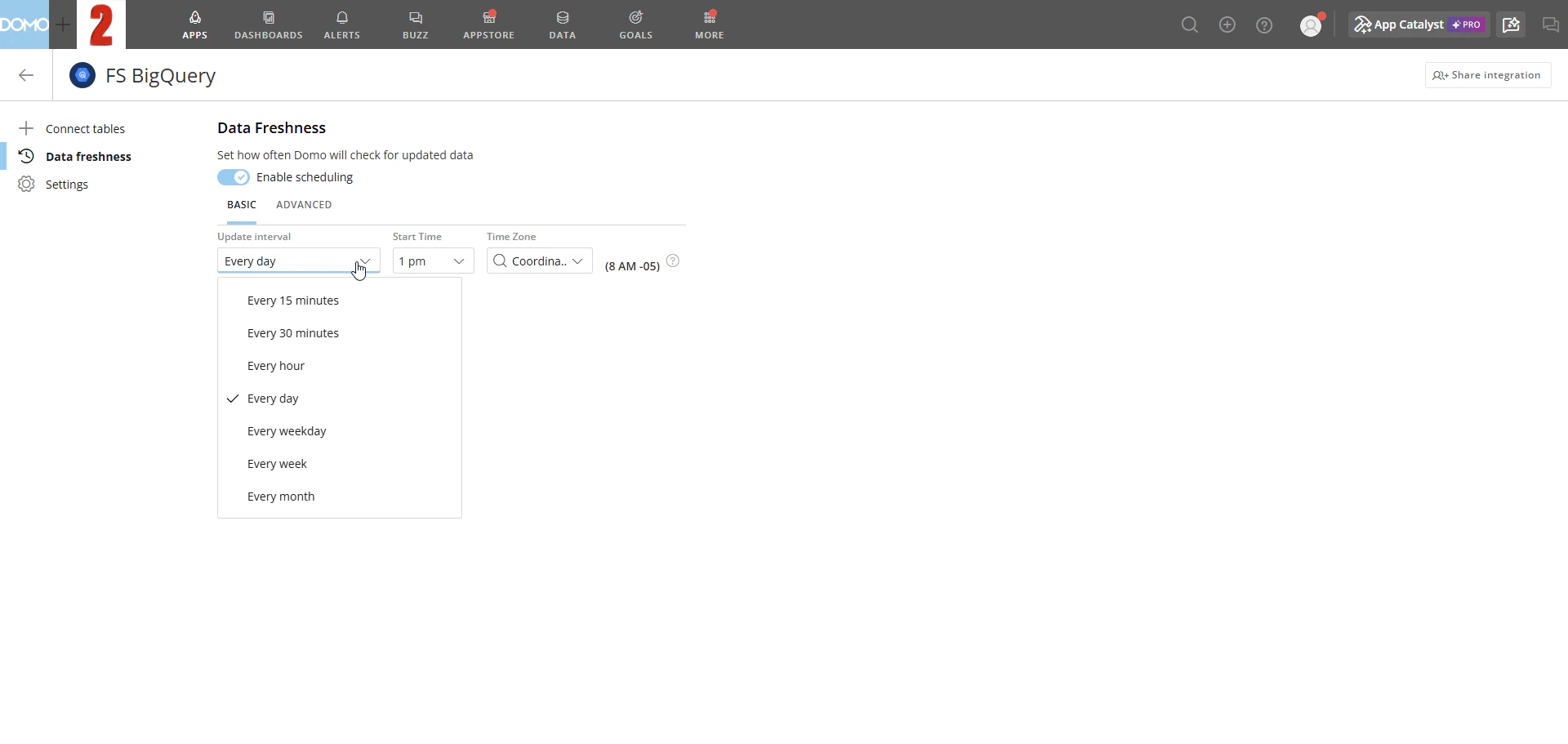
Advanced
Advanced mode gives you granular control over check frequency, day of the week, and monthly schedule. Configure all three settings to define exactly when checks run.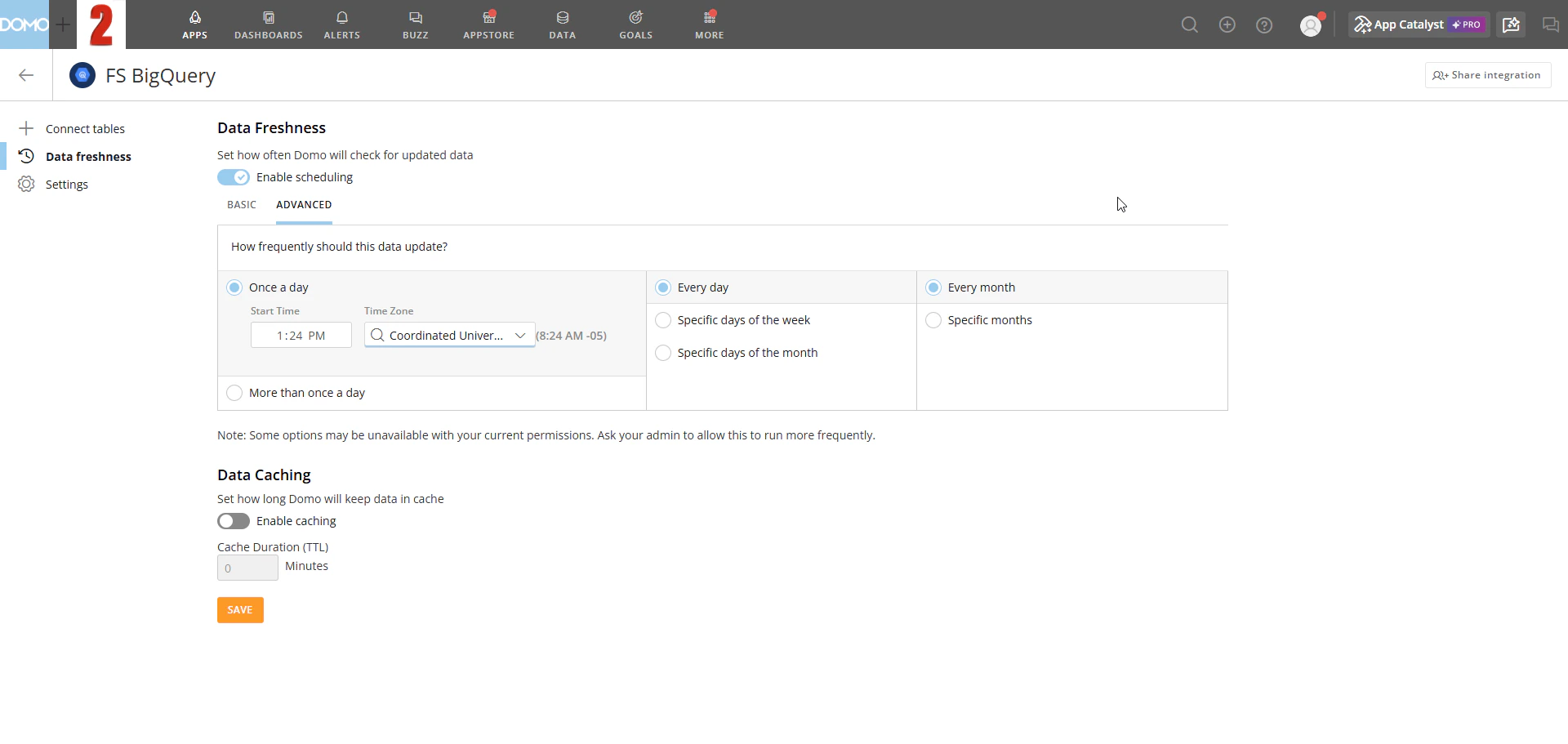
- Once a day — Checks run once per day at the time and time zone you specify.
- More than once a day — Checks repeat throughout the day at the interval you specify. Enable Active hours to restrict checks to a defined window, such as 8 AM–6 PM.
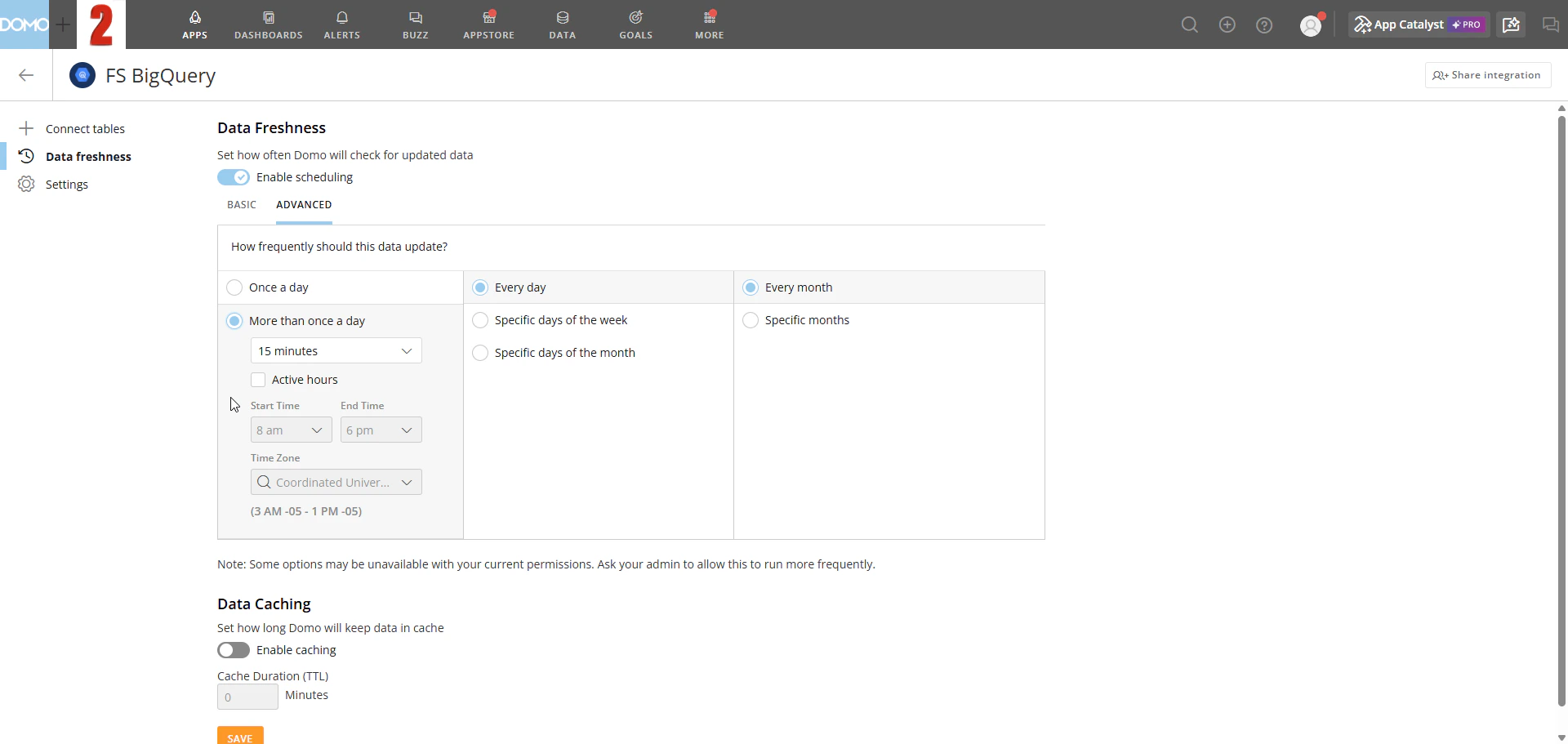
- Every day — Checks run every day of the week.
- Specific days of the week — Checks run only on the days you select.
- Specific days of the month — Checks run only on the calendar dates you select.
- Every month — Checks run every month.
- Specific months — Checks run only in the months you select.
Configure Data Caching
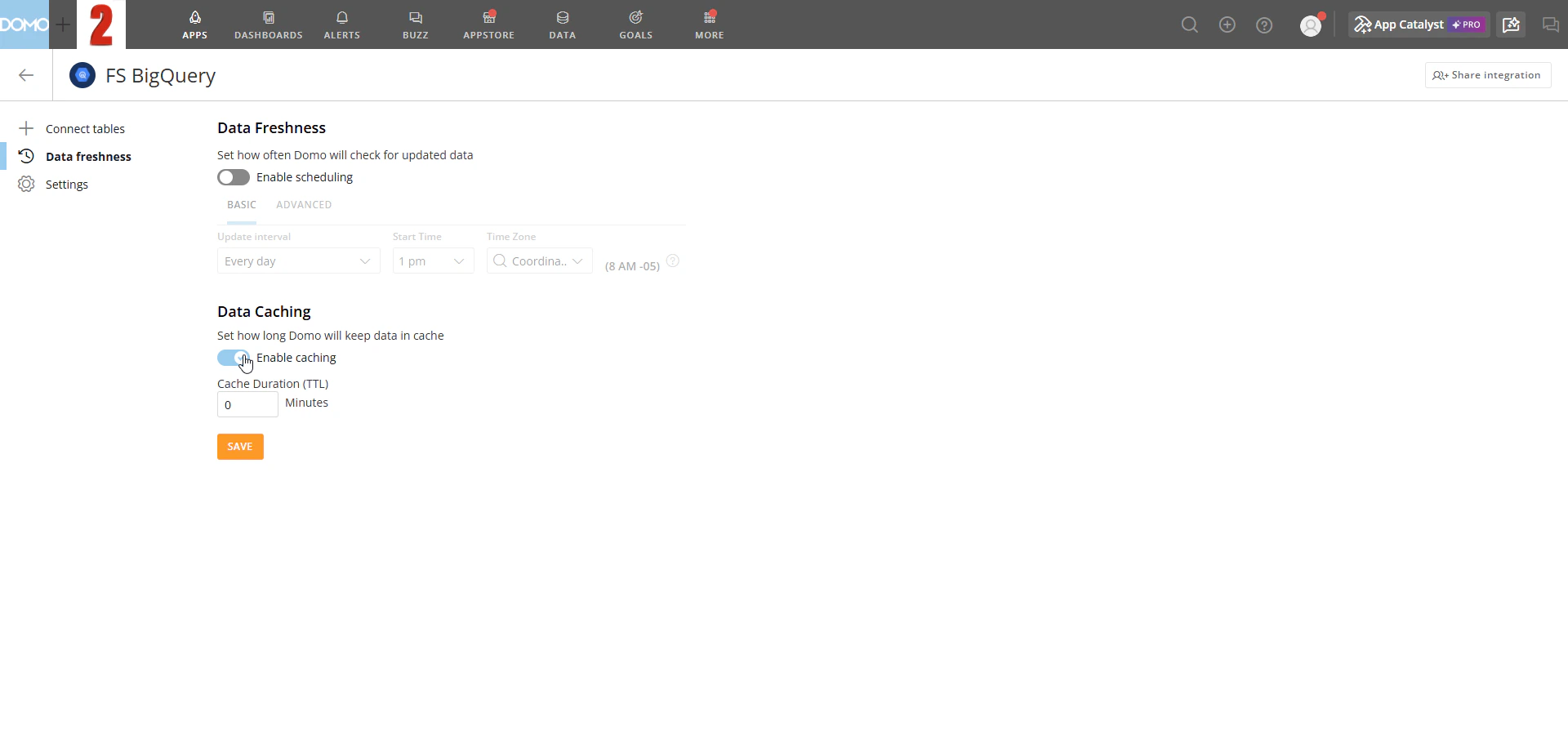
- In the Data Caching section of the Data Freshness tab, turn on the Enable caching toggle.
-
Set Cache Duration (TTL) to control how long Domo retains cached card query results before discarding them. The maximum cache duration is 24 hours.
FAQ
Data Freshness
Why doesn't my data appear to be up to date?
Why doesn't my data appear to be up to date?
Make sure data freshness is enabled and configured to an interval that suits your use case. If data freshness is disabled, card query results may be cached for up to 24 hours.
Does data freshness work when my integration uses OAuth authentication?
Does data freshness work when my integration uses OAuth authentication?
No. Data freshness checks and caching depend on the service account used to connect your integration. These features are disabled when using OAuth.
Caching
When does Domo always query the warehouse instead of using the cache?
When does Domo always query the warehouse instead of using the cache?
Domo bypasses the cache and always sends a fresh query in these situations:
- Viewing the DataSet preview on the DataSet’s Details page
- Loading a DataSet View
- Loading a DataSet into Magic ETL
- Dynamic SQL functions: Queries that include functions such as NOW(), CURRENT_DATE(), or CURRENT_TIMESTAMP() generate a unique SQL string on each execution. Caching is keyed on the exact SQL query, so these queries will not reuse cached results regardless of TTL setting.
Is the warehouse queried every time you view a card?
Is the warehouse queried every time you view a card?
No. When you view a card, Domo first checks for a cached result. If one exists, Domo returns the cached data. If none exists, Domo queries the warehouse.
Is the warehouse queried when someone edits a card?
Is the warehouse queried when someone edits a card?
Yes. When building or editing a card in Analyzer, each change triggers a new query if Auto Preview is enabled.
How long are card query results cached?
How long are card query results cached?
Domo caches card query results for up to 24 hours or until the Cache Duration (TTL) expires—whichever comes first.
Is there a limit on the number of queries Domo will cache?
Is there a limit on the number of queries Domo will cache?
No. There is no explicit limit on the number of cached query results.
Is there a data size limit on what Domo will cache?
Is there a data size limit on what Domo will cache?
No. There is no row or data size limit on what is saved in the card cache.
Can I set a different cache duration for individual DataSets?
Can I set a different cache duration for individual DataSets?
No. The cache duration is set at the integration level and applies to all DataSets within that integration.